


Bitcoin’s Role in Reserve Assets Reexamined Amid Sanctions
We have always followed the principles of transparency and clear information. Some of our content includes affiliate links, and we may earn a small commission through these partnerships. These partnerships do not influence our editorial independence or opinion. By using our site, you accept our privacy policy and terms and conditions.


A Web3 and NFT expert, Elena focuses on the evolution of digital art and blockchain gaming for CryptoWinx. She combines technical expertise with a deep…
Cryptocurrency is a high-risk asset class, and investing carries significant risk, including the potential loss of some or all of your investment. The information on this website is provided for informational and educational purposes only and does not constitute financial, investment, or gambling advice. Cryptowinx does not endorse any specific exchange or gaming platform. For more details, please read our terms and full disclaimer.
Cryptowinx navigates the digital asset universe with a dynamic, forward-looking vision. Throughout our evolution, we have followed every market cycle, from vertical rises to corrections, always remaining a solid point of reference for our community. Our team is made up of industry experts and analysts who experience the blockchain ecosystem daily: we constantly monitor Bitcoin’s stability, study the expansion of the Ethereum ecosystem, and analyze the new frontiers of crypto casinos. We are committed to absolute editorial integrity, separating the signal from the noise through rigorous fact-checking and multi-perspective news analysis. In a landscape where innovations emerge in moments, our mission is to simplify complex concepts and offer transparency into what is established and what is still experimental.
Learn more Cryptowinx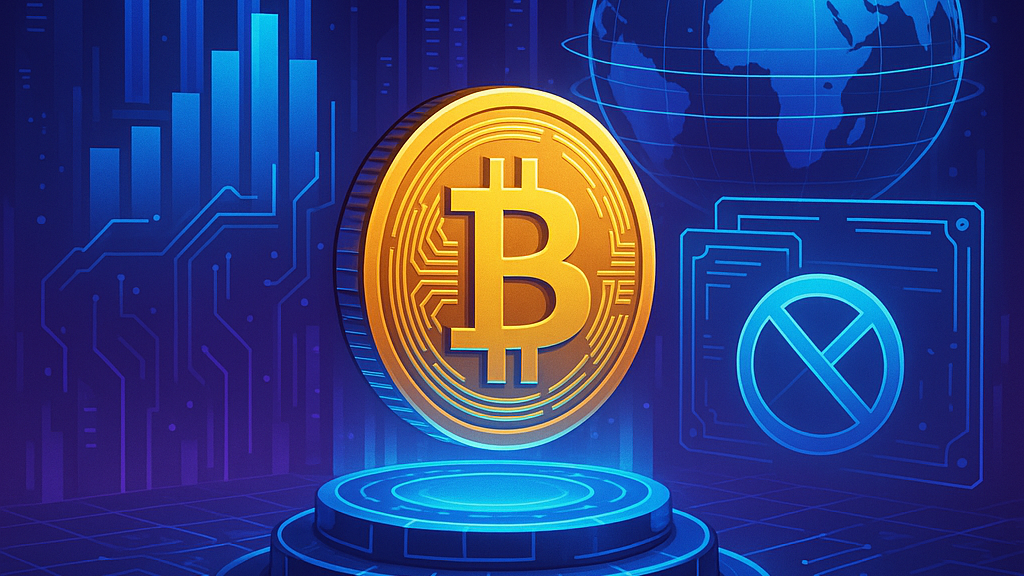
A recent analysis conducted by the Bitcoin Policy Institute has sparked a compelling discussion about reserve assets in Taiwan, particularly regarding the concentration of the nation’s reserves in U.S. dollars. It suggests that while gold has not realized its full potential in this context, Bitcoin could serve as a valuable addition to the mix.
However, to truly grasp the significance of the paper, readers must delve deeper than the initial argument. Within the scope of the blockade-and-invasion framework presented, the paper seeks to redefine the parameters that determine the viability of a reserve asset.

Traditionally, the assessment of reserve assets relies on their liquidity, price stability, and credit quality. The Bitcoin Policy Institute proposes introducing a fourth criterion: the asset’s ability to be utilized in situations where shipping routes are disrupted, custodial access is revoked, or geopolitical tensions arise.
This leads to a critical realization—gold can become inaccessible, dollar reserves might face conditional limits, but Bitcoin retains its electronic portability regardless of diplomatic issues or physical access.
This conceptual shift extends well beyond supporting a Taiwanese stance on Bitcoin. It emphasizes a departure from established methods of reserve evaluation. The ongoing analysis suggests that reserve managers might prioritize accessibility over stability, positioning Bitcoin not merely as an investment opportunity but as a crucial contingency asset.
Historically, the discourse around Bitcoin at the state level has been fairly narrow, focusing on its potential to hedge against currency devaluation and to diversify reserves. Yet, the Bitcoin Policy Institute brings forth a more nuanced perspective. Their research ranks reserve assets by their accessibility when coercive actions come into play.
At a fundamental level, governments must recognize the unique dependencies associated with holding Treasuries, engaging with correspondent banks, and storing precious metals physically.
Crucially, the policy debate revolves around identifying which asset remains usable when issues of custody, transportation, or political climates become problematic. The International Monetary Fund (IMF) indicates that total international reserves, including gold, reached 12.5 trillion Special Drawing Rights (SDR) as of the end of 2024.
The European Central Bank (ECB) noted that gold’s share of global reserves climbed to 20% in market value during the same year, surpassing the euro’s 16%, reflecting a significant uptick in central bank purchases.
Recent surveys from the World Gold Council indicated that 73% of central banks anticipate a decrease in U.S. dollar holdings within the next five years, while the rate of banks opting for domestic gold storage rose dramatically from 41% to 59% year-over-year.
The shift in perspective among reserve managers is evident, and the Bitcoin Policy Institute’s paper seeks to broaden this understanding to include Bitcoin within that framework.
The implications of access risk have been highlighted by recent geopolitical events. For instance, when Russia’s central bank faced a freeze of approximately $300 billion in sovereign assets by the EU, it illustrated how reserve assets could be rendered politically immobilized despite retaining their theoretical value.
This scenario demonstrates that an asset, while appearing secure on paper, can fail its role as a reserve if it becomes unusable in practice.
Brazil’s response was similarly telling. In March, the country increased its gold reserves from 3.55% to 7.19% within just one year, reducing its reliance on U.S. dollars in the process, an action prompted by the need for diversification.
The Bitcoin Policy Institute incorporates Bitcoin into this conversation as a part of diversification discussions, particularly driven by geopolitical influences.
The establishment of the U.S. Strategic Bitcoin Reserve underscores the gravity of this discussion. Through a presidential order, the administration has signaled a commitment to Bitcoin, establishing it as a reserve asset within a governmental framework.
This movement towards institutional acceptance sets a significant precedent, regardless of Bitcoin’s unique funding approach.
In terms of scale, Taiwan’s reserves total approximately $602 billion. A minimal Bitcoin allocation of 1% would amount to around $6 billion, significantly impacting market dynamics even before formal decisions are made.
Proponents argue that a growing number of states, particularly those exposed to sanctions, may begin to establish small Bitcoin positions as part of their formal reserves.
Conversely, critics assert that access risks must also be taken seriously. They recognize the logistical challenges associated with gold and the political constraints of dollar reserves, yet argue that Bitcoin’s volatility and limited acceptance among official sectors render it a less preferable option than gold or diversified non-dollar holdings.
Nonetheless, the Bitcoin Policy Institute has made a compelling case that accessibility and portability are essential characteristics for a reserve asset in today’s geopolitical climate. As reserves increasingly reflect the influence of geopolitics, the need for flexibility and avoidance of concentrated dependencies has never been more pressing.
In sum, the argument for Bitcoin’s inclusion as a reserve asset is evolving. As policymakers and reserve managers reconsider their strategies, Bitcoin may find its place not solely as an alternative investment but as a necessary part of a diversified, resilient reserve strategy.
Leave the reaction
Elena Rodriguez











Commentaries
Add your comment
Fill in necessary fields and publish