


Market Turbulence: Signs of Strain in Treasury Auctions
We have always followed the principles of transparency and clear information. Some of our content includes affiliate links, and we may earn a small commission through these partnerships. These partnerships do not influence our editorial independence or opinion. By using our site, you accept our privacy policy and terms and conditions.


A crypto casino and gaming specialist, Raj brings a digital native’s perspective to industry trends and provably fair systems. Having reviewed over 150 platforms, he…
Cryptocurrency is a high-risk asset class, and investing carries significant risk, including the potential loss of some or all of your investment. The information on this website is provided for informational and educational purposes only and does not constitute financial, investment, or gambling advice. Cryptowinx does not endorse any specific exchange or gaming platform. For more details, please read our terms and full disclaimer.
Cryptowinx navigates the digital asset universe with a dynamic, forward-looking vision. Throughout our evolution, we have followed every market cycle, from vertical rises to corrections, always remaining a solid point of reference for our community. Our team is made up of industry experts and analysts who experience the blockchain ecosystem daily: we constantly monitor Bitcoin’s stability, study the expansion of the Ethereum ecosystem, and analyze the new frontiers of crypto casinos. We are committed to absolute editorial integrity, separating the signal from the noise through rigorous fact-checking and multi-perspective news analysis. In a landscape where innovations emerge in moments, our mission is to simplify complex concepts and offer transparency into what is established and what is still experimental.
Learn more Cryptowinx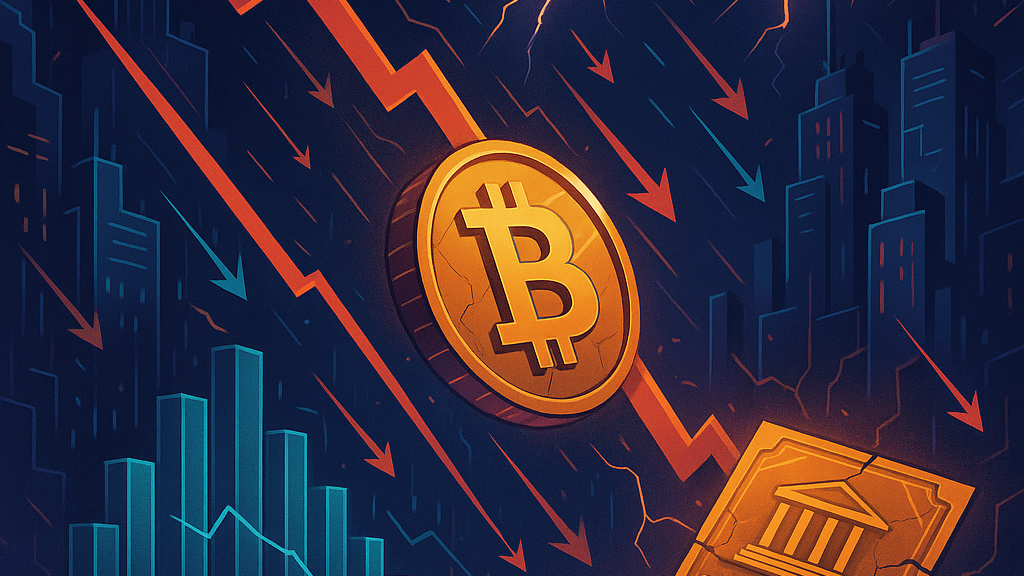
Recent market conditions are raising alarms among investors, particularly in the wake of soaring oil prices and ongoing geopolitical tensions. These factors contribute to a heightened sense of uncertainty that has even permeated traditionally stable assets like U.S. Treasuries.
A recent auction of 2-year U.S. Treasuries highlighted this unease. These bonds, which are closely monitored for their reflection of investor sentiment regarding future interest rates and inflation, saw a significant dip in demand. Investors are beginning to question the stability of short-term government debt amid mounting economic pressures.

On Tuesday, the Treasury offered $69 billion in 2-year notes at a yield of 3.936%, but demand faltered compared to previous sales. The bid-to-cover ratio, an indicator of investor interest, dropped from 2.63 in February to 2.44, suggesting that many are reluctant to lend money to the government at this rate.
This weak auction coincided with escalating tensions in the Middle East, which have driven oil prices upward and diminished expectations for any immediate Federal Reserve rate cuts. U.S. business activity is reported to have fallen to an 11-month low in March, creating a challenging environment for both policymakers and investors.
The 2-year Treasury, often seen as a bellwether for interest rate movements, indicated that investors are less convinced of the Federal Reserve’s ability to ease policy soon. Instead, there is growing apprehension about inflation outpacing the usual safety measures that government bonds provide during geopolitical crises.
Investors had been optimistic about a potential easing of inflation and a stable economic recovery, hoping this environment would allow the Fed to lower interest rates. However, the recent spike in oil prices, driven by the threat of broader conflict in the region, has complicated this view.
As energy costs rise, questions arise regarding the efficacy of holding 2-year Treasuries as a protection against inflation. With the notion of safety in assets shifting, investors are now seeking higher returns to offset the increased risk presented by climbing prices and uncertain economic forecasts.
Recent statements from Federal Reserve officials, such as Governor Michael Barr, have further amplified concerns. He noted the possibility of maintaining current rates for an extended period due to inflationary pressures and risks stemming from international conflicts.
This auction serves as a critical indicator of market sentiment moving forward. As investors reassess their strategies, the stability of financial conditions may come under strain. Elevated short-term yields can tighten lending conditions, influence asset valuations, and elevate risk aversion across various markets.
The implications of a weakening demand for 2-year Treasuries extend far beyond bondholders; these shifts could impact a wide swath of economic activities. Future expectations surrounding the Fed’s policy decisions will inevitably ripple through all financial sectors.
For the moment, investors are left grappling with a complex narrative filled with geopolitical unrest, market volatility, and the looming threat of inflation. As they look ahead, the consensus appears to reflect a more challenging economic landscape than previously anticipated.
In summary, the recent auction of 2-year Treasuries signals a worrying trend as investors adjust their expectations in light of rising energy prices and the Fed’s diminishing room for maneuver. These conditions suggest a turbulent road ahead for the economy and financial markets alike.
Leave the reaction
Raj Patel









Commentaries
Add your comment
Fill in necessary fields and publish