


Market Turmoil: Rising Yields and Geopolitical Tensions Weigh on Bitcoin
We have always followed the principles of transparency and clear information. Some of our content includes affiliate links, and we may earn a small commission through these partnerships. These partnerships do not influence our editorial independence or opinion. By using our site, you accept our privacy policy and terms and conditions.


A Web3 and NFT expert, Elena focuses on the evolution of digital art and blockchain gaming for CryptoWinx. She combines technical expertise with a deep…
Cryptocurrency is a high-risk asset class, and investing carries significant risk, including the potential loss of some or all of your investment. The information on this website is provided for informational and educational purposes only and does not constitute financial, investment, or gambling advice. Cryptowinx does not endorse any specific exchange or gaming platform. For more details, please read our terms and full disclaimer.
Cryptowinx navigates the digital asset universe with a dynamic, forward-looking vision. Throughout our evolution, we have followed every market cycle, from vertical rises to corrections, always remaining a solid point of reference for our community. Our team is made up of industry experts and analysts who experience the blockchain ecosystem daily: we constantly monitor Bitcoin’s stability, study the expansion of the Ethereum ecosystem, and analyze the new frontiers of crypto casinos. We are committed to absolute editorial integrity, separating the signal from the noise through rigorous fact-checking and multi-perspective news analysis. In a landscape where innovations emerge in moments, our mission is to simplify complex concepts and offer transparency into what is established and what is still experimental.
Learn more Cryptowinx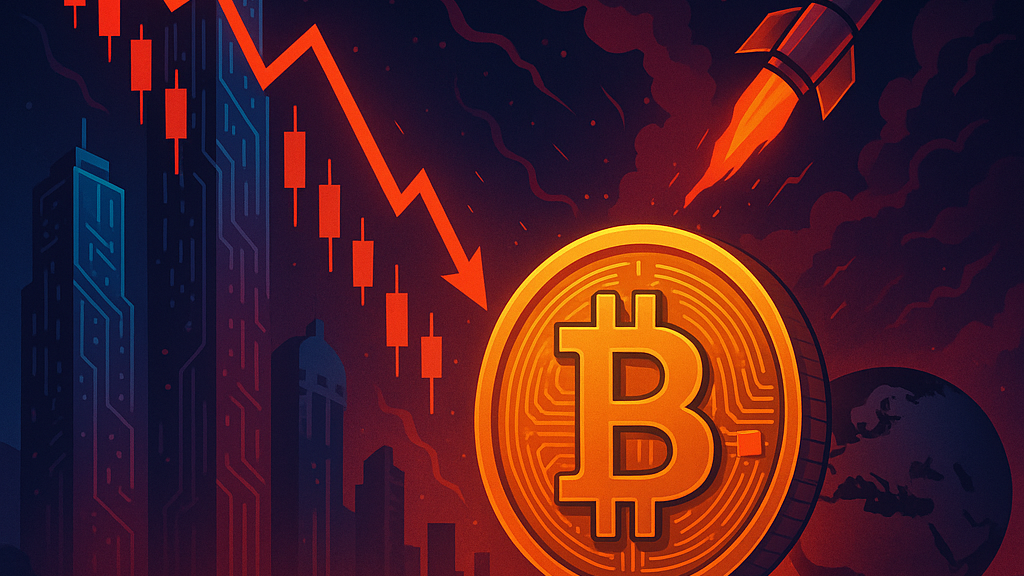
Recent fluctuations in the financial markets have placed Bitcoin under significant pressure, primarily driven by the surge in US Treasury yields and escalating geopolitical tensions stemming from the conflict in Iran.
The demand for cash has surged as investors react to a combination of falling tech stock values and increasing bond yields, stifling any potential bullish momentum for Bitcoin.

Data indicates that investors are pulling back on riskier assets, opting instead for cash amid fears of rising oil prices due to ongoing conflicts. The current economic landscape has led many to adopt a defensive strategy, commonly characterized by moving investments out of gold and bonds.
Bitcoin recently tested $67,500 in support, a movement that coincided with a historic drop in gold prices, marking its steepest correction in over half a century. The impact of the prolonged war in Iran, alongside oil prices consistently above $85, has compelled investors to reassess their risk exposure.
The US 5-year Treasury yield reached a notable 4.10%, reflecting a notable increase as traders pivoted towards more liquid positions. This spike demonstrates a broader trend of selling off Treasuries, highlighting the urgency for traders to build cash reserves. In conjunction with this, the S&P 500 index fell to its lowest point in over six months, further signaling a market eager for liquidity.
Amidst this turmoil, inflationary pressures have intensified. Oil prices ascended past $90 per barrel, amplifying concerns among investors. Reports suggest that the US is preparing to deploy approximately 3,000 troops to the Middle East, a strategic move aimed at countering Iran’s influence over vital shipping lanes.
Additionally, market sentiment reflects growing skepticism regarding potential easing of US monetary policy in the near future. The implied probability of the Federal Open Market Committee (FOMC) increasing interest rates by July surged dramatically to over 20%, up from virtually zero just the previous week.
In parallel, discussions within Congress concerning additional funding for military efforts in Iran have revealed a cautious stance among lawmakers, reflecting public unease with the ongoing military strategy.

The national debt has surpassed $39 trillion, exacerbating the economic strain on consumers and prompting fears of a cost-of-living crisis. Speculation around over-investment in the tech sector has also emerged, particularly concerning companies like OpenAI, which offered significant guaranteed returns despite being largely unprofitable.
The repercussions of these shifts are evident, with some major technology firms experiencing declines of 10% or more over the past six weeks. Investors are increasingly wary of a looming recession or inflation rates that could exceed fixed-income returns.
Ultimately, the combination of declining stock markets and persistent inflation has reinforced a flight to safety among investors, with many opting for cash holdings. Despite some favorable on-chain metrics for Bitcoin, the overarching macroeconomic conditions continue to pose a significant challenge for any sustained upward movement in its price.
As long as inflation and military expenditures continue to strain US monetary policy, the potential for Bitcoin to retest the $66,000 level looms as a pressing reality, rendering the market outlook uncertain.
Leave the reaction
Elena Rodriguez












Commentaries
Add your comment
Fill in necessary fields and publish