


Regulatory Changes Loom as $700M in Iran Bets Raise Concerns
We have always followed the principles of transparency and clear information. Some of our content includes affiliate links, and we may earn a small commission through these partnerships. These partnerships do not influence our editorial independence or opinion. By using our site, you accept our privacy policy and terms and conditions.


A crypto casino and gaming specialist, Raj brings a digital native’s perspective to industry trends and provably fair systems. Having reviewed over 150 platforms, he…
Cryptocurrency is a high-risk asset class, and investing carries significant risk, including the potential loss of some or all of your investment. The information on this website is provided for informational and educational purposes only and does not constitute financial, investment, or gambling advice. Cryptowinx does not endorse any specific exchange or gaming platform. For more details, please read our terms and full disclaimer.
Cryptowinx navigates the digital asset universe with a dynamic, forward-looking vision. Throughout our evolution, we have followed every market cycle, from vertical rises to corrections, always remaining a solid point of reference for our community. Our team is made up of industry experts and analysts who experience the blockchain ecosystem daily: we constantly monitor Bitcoin’s stability, study the expansion of the Ethereum ecosystem, and analyze the new frontiers of crypto casinos. We are committed to absolute editorial integrity, separating the signal from the noise through rigorous fact-checking and multi-perspective news analysis. In a landscape where innovations emerge in moments, our mission is to simplify complex concepts and offer transparency into what is established and what is still experimental.
Learn more Cryptowinx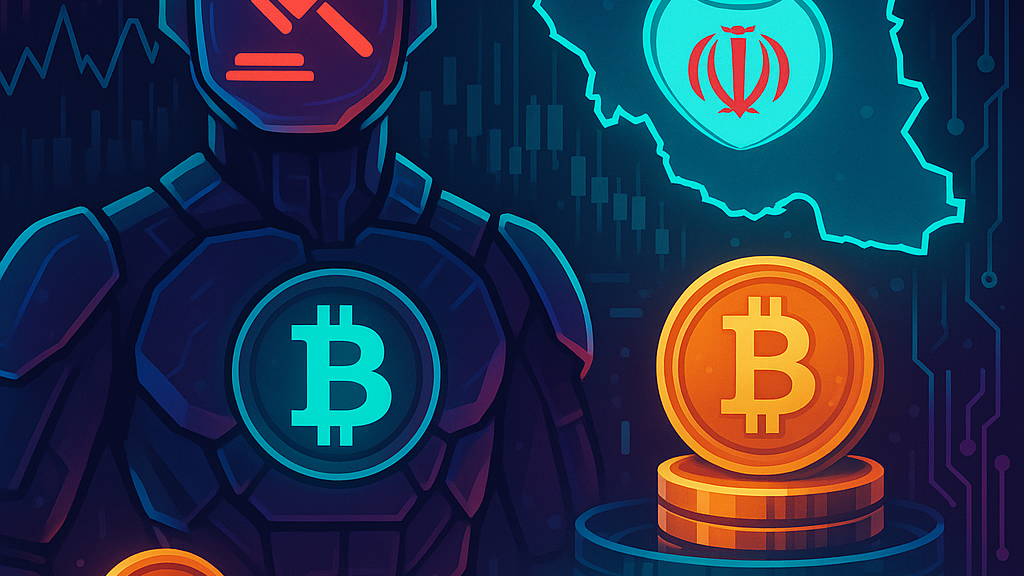
The recent surge in prediction markets, particularly those linked to political events in Iran, has sparked significant regulatory interest in Washington. Companies like Polymarket and Kalshi are reportedly engaging in fundraising talks that could value them at approximately $20 billion each, a reflection of their growing significance in the consumer-fintech space.
However, this upbeat financial narrative is overshadowed by troubling developments surrounding Iran-related contracts, which have raised questions regarding the integrity of these markets. Reports indicate that around $529 million was bet on the timing of military attacks, with an additional $150 million wagered on contracts related to the potential removal of Iranian Supreme Leader Ali Khamenei. These markets have been scrutinized due to allegations of unusually timed trades, leading to profits of about $1.2 million across six accounts, drawing attention to the potential for insider trading.

In light of these developments, lawmakers are beginning to draft legislation aimed at overseeing prediction markets more closely. The Commodity Futures Trading Commission (CFTC) has also indicated that it is moving towards establishing new regulations. Market analysts suggest that while probability assessments could become integrated into mainstream financial systems, the unique nature of these prediction platforms presents substantial risks that regulators find concerning.
Prediction markets can transform public interest into financial transactions, creating real-time probability feeds packaged as market data. This function puts them in a different category compared to traditional gambling, aligning them more with financial analytics. High-profile partnerships between these platforms and major media outlets are further solidifying their position within the financial news ecosystem, complicating regulatory considerations.
Media collaborations, such as Kalshi’s deal with CNBC, are set to include probability data in programming, while Polymarket has secured an agreement with Dow Jones to feature its data across several financial publications. These partnerships elevate the stakes considerably; as prediction markets gain recognition, they influence public perception of current events and perceived probabilities of future occurrences. This places a heavier burden on these platforms to maintain trust and transparency.
As the situation evolves, issues surrounding trust and fairness have come to the forefront. Prediction markets thrive on the belief that rules are consistently enforced and that the playing field remains equitable. When the stakes involve military actions, the potential for leaked information raises serious political implications. Consequently, the urgency for regulatory action has increased.

A bipartisan group, including Rep. Mike Levin and Sen. Chris Murphy, is taking steps toward drafting new regulations that would clarify permissible event contracts. Concurrently, CFTC Chair Michael Selig has noted that a proposal for new rules is in progress, addressing critical aspects such as contract design and enforcement protocols.
The regulatory landscape is at a crossroads. Washington must decide whether to formally recognize prediction markets as legitimate instruments while establishing clearer boundaries or to restrict contracts associated with sensitive political matters entirely. The recent political climate and the undeniable public interest in military actions complicate the decision-making process.
As the markets continue to evolve, the intersection of investment, public interest, and regulatory oversight presents a complex challenge. Stakeholders—including investors seeking growth, users requiring consistent guidelines, and regulators aiming to safeguard market integrity—must navigate this evolving landscape carefully to ensure that the benefits of prediction markets do not come at the expense of transparency and fairness.
Leave the reaction
Raj Patel












Commentaries
Add your comment
Fill in necessary fields and publish