


Bitcoin Faces Challenges Amidst Volatile Markets and ETF Gains
We have always followed the principles of transparency and clear information. Some of our content includes affiliate links, and we may earn a small commission through these partnerships. These partnerships do not influence our editorial independence or opinion. By using our site, you accept our privacy policy and terms and conditions.


A crypto casino and gaming specialist, Raj brings a digital native’s perspective to industry trends and provably fair systems. Having reviewed over 150 platforms, he…
Cryptocurrency is a high-risk asset class, and investing carries significant risk, including the potential loss of some or all of your investment. The information on this website is provided for informational and educational purposes only and does not constitute financial, investment, or gambling advice. Cryptowinx does not endorse any specific exchange or gaming platform. For more details, please read our terms and full disclaimer.
Cryptowinx navigates the digital asset universe with a dynamic, forward-looking vision. Throughout our evolution, we have followed every market cycle, from vertical rises to corrections, always remaining a solid point of reference for our community. Our team is made up of industry experts and analysts who experience the blockchain ecosystem daily: we constantly monitor Bitcoin’s stability, study the expansion of the Ethereum ecosystem, and analyze the new frontiers of crypto casinos. We are committed to absolute editorial integrity, separating the signal from the noise through rigorous fact-checking and multi-perspective news analysis. In a landscape where innovations emerge in moments, our mission is to simplify complex concepts and offer transparency into what is established and what is still experimental.
Learn more Cryptowinx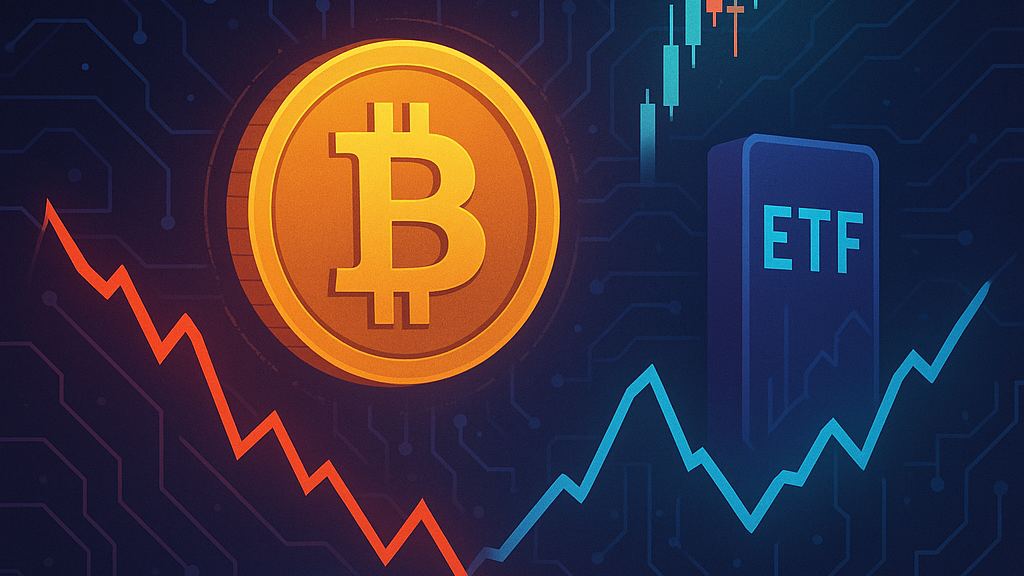
Recent geopolitical tensions have sent shockwaves through financial markets, leaving Bitcoin in a precarious position despite positive movements in exchange-traded funds (ETFs). The cryptocurrency experienced heightened volatility following military strikes between the U.S. and Israel against Iranian targets, which prompted a risk-averse response from investors over the weekend.
Bitcoin’s value dipped to approximately $63,000 before a slight rebound brought it closer to $67,000. This fluctuation illustrates the ongoing balance traders are attempting to strike between global economic uncertainties and their current positions in the market. Analysis from Wintermute indicates that broader macroeconomic factors are influencing digital asset prices more significantly than specific events related to cryptocurrencies.

Operation “Epic Fury,” which involved coordinated military actions against Iranian forces, has raised concerns about further destabilization in the region. This, in turn, has had a marked effect on energy prices, leading to rapid increases in both oil and gold prices, while the cryptocurrency and equity markets have found it difficult to maintain stability.
By Monday, the closure of the Strait of Hormuz and the restriction of airspace in the region signaled to traders that supply risks were mounting. Consequently, oil prices surged nearly 9%, pushing Brent crude above $80, with some price forecasts predicting it could reach $100. Similarly, gold saw an increase of nearly $5,400, gaining roughly $1 trillion in market capitalization within a short timeframe. In stark contrast, U.S. equities opened significantly lower, indicating a classic ‘risk-off’ trading environment.
Despite the stress on Bitcoin, recent ETF inflows provided a glimmer of hope. Over $1 billion entered Bitcoin ETFs last week, breaking a streak of five consecutive weeks of outflows. However, year-to-date inflows remain negative, totaling approximately $4.5 billion. Wintermute’s findings suggest that the recent selling pressure is primarily from speculative positions rather than institutional investors exiting the market.
Though Bitcoin’s rebound hints at some stabilization, it is essential to note that the cryptocurrency remains about 45% lower than its all-time peaks. The persistent risks associated with energy prices and inflation could impact the momentum within digital asset markets. Elevated oil prices could exacerbate broader economic costs, complicating the Federal Reserve’s monetary policy outlook.
Trading activity for Bitcoin has also shown signs of weakness, with current market dynamics lacking the vigorous demand previously seen when Bitcoin traded at higher levels between $85,000 and $95,000 from November to September. At present, the demand for protection through options is evident, as seen in the increase of the DVOL index and the pricing of daily market swings.
While some traders still view the mid-to-high $50,000 range as an attractive prospect within a longer investment timeline of 12 to 18 months, the current environment suggests that Bitcoin may temporarily play a secondary role to commodities and hard assets. Therefore, unless a resolution to the ongoing geopolitical conflict occurs, Bitcoin’s transition to reestablishing itself as a safe haven akin to ‘digital gold’ remains uncertain.
Leave the reaction
Raj Patel












Commentaries
Add your comment
Fill in necessary fields and publish