


Potential Oil Crisis May Impact Bitcoin Liquidity Soon
We have always followed the principles of transparency and clear information. Some of our content includes affiliate links, and we may earn a small commission through these partnerships. These partnerships do not influence our editorial independence or opinion. By using our site, you accept our privacy policy and terms and conditions.


A presale and tokenomics specialist, Sofia evaluates new crypto projects with the analytical rigor of her Bocconi background. Having reviewed over 200 launches, she excels…
Cryptocurrency is a high-risk asset class, and investing carries significant risk, including the potential loss of some or all of your investment. The information on this website is provided for informational and educational purposes only and does not constitute financial, investment, or gambling advice. Cryptowinx does not endorse any specific exchange or gaming platform. For more details, please read our terms and full disclaimer.
Cryptowinx navigates the digital asset universe with a dynamic, forward-looking vision. Throughout our evolution, we have followed every market cycle, from vertical rises to corrections, always remaining a solid point of reference for our community. Our team is made up of industry experts and analysts who experience the blockchain ecosystem daily: we constantly monitor Bitcoin’s stability, study the expansion of the Ethereum ecosystem, and analyze the new frontiers of crypto casinos. We are committed to absolute editorial integrity, separating the signal from the noise through rigorous fact-checking and multi-perspective news analysis. In a landscape where innovations emerge in moments, our mission is to simplify complex concepts and offer transparency into what is established and what is still experimental.
Learn more Cryptowinx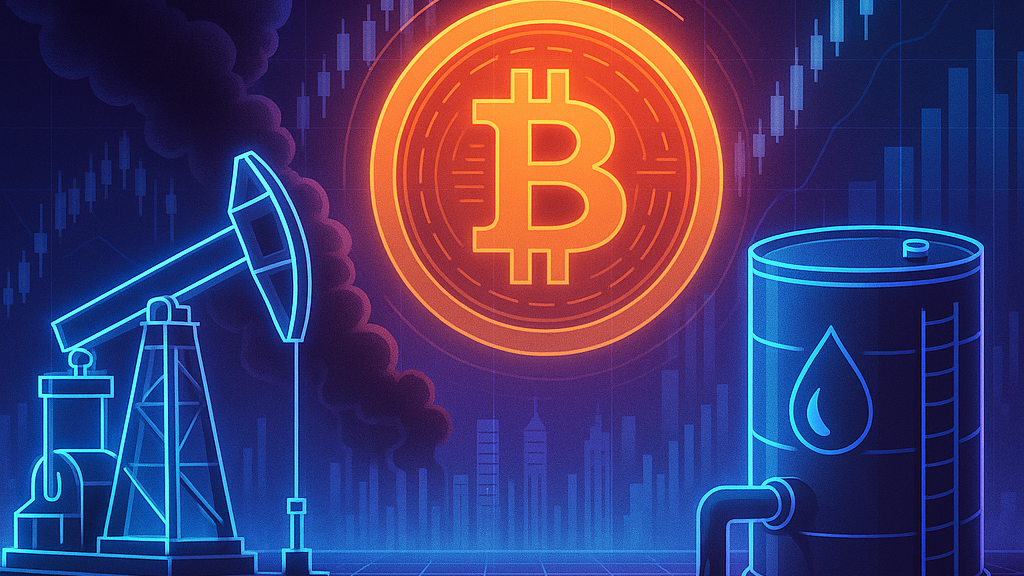
As tensions rise around the Strait of Hormuz, crypto traders are increasingly shifting their focus from blockchain fundamentals to global economic risks.
The Strait of Hormuz is crucial for the world’s oil supply, with around 20% of it transported through this narrow waterway daily. Although there hasn’t been an official blockade, military activities in the area have prompted a significant increase in war-risk insurance premiums.

Shipping insurance for oil tankers has surged by more than 50%, indicating heightened concerns. For instance, the cost for insuring a $100 million vessel has jumped from approximately $250,000 to $375,000 per journey due to fears of supply interruptions. Analysts warn that if disruptions persist, crude oil prices could soar to between $120 and $130 per barrel.
This potential spike in oil prices has broader implications beyond the energy sector, particularly for cryptocurrency markets. An increase of this magnitude could reignite inflation worries at a time when markets have started to anticipate easing monetary policies.
Higher crude costs directly affect transportation, manufacturing, and consumer goods, thereby creating upward pressure on global consumer price index (CPI) figures. An expert in macroeconomic analysis explained that while initial responses to conflict typically lead to market fluctuations, the embrace of higher inflation expectations may ultimately support Bitcoin’s price.
When inflation expectations rise, central banks, including the Federal Reserve, may be compelled to alter their anticipated monetary easing, which can lead to higher Treasury yields. Such a shift in yields impacts global liquidity, making capital less available for riskier assets like cryptocurrencies.
Historically, Bitcoin has functioned as a high-beta asset in times of tight liquidity. As real yields increase, the digital currency often underperforms due to reduced leverage and rising funding costs.
It is important to note that a geopolitical crisis is not required for Bitcoin to decline; merely tightening liquidity could be sufficient. Social media influencers in the crypto space are already cautioning of potential volatility spikes associated with the ongoing situation in the Strait of Hormuz. Commentators have laid out a plausible chain reaction: increasing oil prices contribute to inflation, which leads to a halt in anticipated rate cuts and subsequently rising yields—all of which create tighter liquidity.

Another analyst pointed to a looming risk related to Bitcoin mining, especially in Iran, which has become a hub for low-cost Bitcoin production. Disruption to the energy supply could lead to a significant reduction in Bitcoin’s hashrate and swift market ramifications.
Despite the grim forecasts, not all political figures see an immediate cause for concern. One prominent politician stated that he is not worried about the current events surrounding the Strait of Hormuz.
However, it is noteworthy that financial markets generally react more decisively to movements in bond yields than to political assurances. The unique structure of crypto derivatives makes these markets particularly sensitive to shifts in liquidity. When macroeconomic shocks occur, rapid liquidations of leveraged positions can follow.
Typically, high-risk assets like cryptocurrencies and small-cap stocks feel the impact first in these scenarios. With cryptocurrency trading available around the clock, reactions can be quicker and more severe compared to traditional markets.
As traders closely monitor crude oil prices and bond markets for indicators, a de-escalation in the region could alleviate pressure and restore risk appetite. Yet, if disruptions persist, what may begin as an energy issue could evolve into a significant liquidity event for the cryptocurrency sector. The upcoming trading sessions will be crucial in determining whether the current tensions yield merely transient noise or signal the onset of a major selloff in crypto markets.
Leave the reaction
Sofia Russo











Commentaries
Add your comment
Fill in necessary fields and publish