


Exploring XRP and XLM: Origins, Functions, and Distinctions
We have always followed the principles of transparency and clear information. Some of our content includes affiliate links, and we may earn a small commission through these partnerships. These partnerships do not influence our editorial independence or opinion. By using our site, you accept our privacy policy and terms and conditions.


A Web3 and NFT expert, Elena focuses on the evolution of digital art and blockchain gaming for CryptoWinx. She combines technical expertise with a deep…
Cryptocurrency is a high-risk asset class, and investing carries significant risk, including the potential loss of some or all of your investment. The information on this website is provided for informational and educational purposes only and does not constitute financial, investment, or gambling advice. Cryptowinx does not endorse any specific exchange or gaming platform. For more details, please read our terms and full disclaimer.
Cryptowinx navigates the digital asset universe with a dynamic, forward-looking vision. Throughout our evolution, we have followed every market cycle, from vertical rises to corrections, always remaining a solid point of reference for our community. Our team is made up of industry experts and analysts who experience the blockchain ecosystem daily: we constantly monitor Bitcoin’s stability, study the expansion of the Ethereum ecosystem, and analyze the new frontiers of crypto casinos. We are committed to absolute editorial integrity, separating the signal from the noise through rigorous fact-checking and multi-perspective news analysis. In a landscape where innovations emerge in moments, our mission is to simplify complex concepts and offer transparency into what is established and what is still experimental.
Learn more Cryptowinx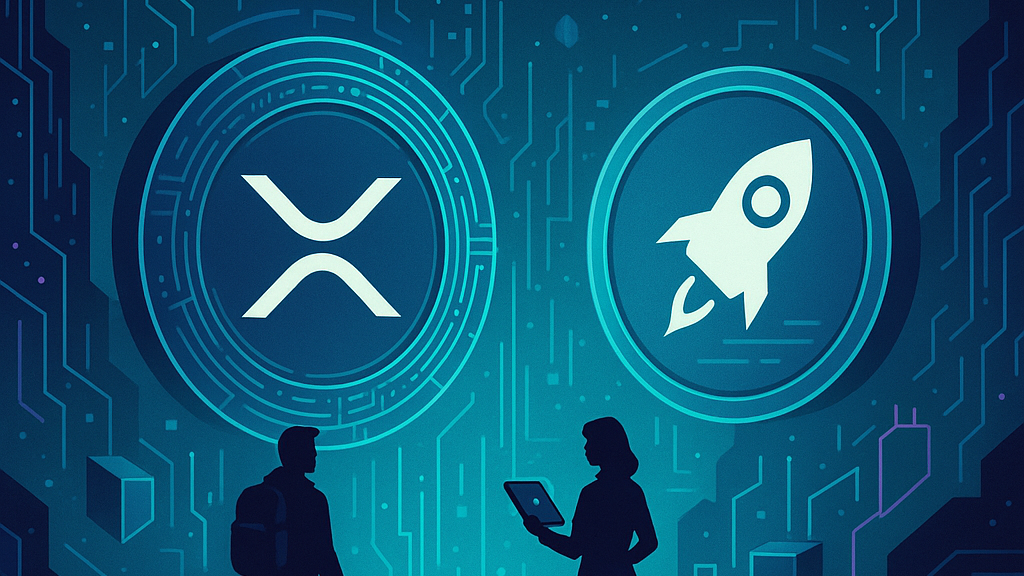
XRP and XLM, both popular cryptocurrencies, have unique characteristics that define their roles in global finance. Although they share a common origin, the paths they have taken reveal significant differences in their objectives and technologies.
Ripple Labs, initially founded as Opencoin, introduced XRP in 2012 as a digital asset meant to facilitate rapid and energy-efficient cross-border payments. Following two years later in 2014, the Stellar Network emerged, featuring XLM (commonly known as Lumen) as its native currency.

While both XRP and XLM aim to enhance financial inclusion and streamline international transactions, their approaches and ecosystems vary notably. The evolution of these networks from their shared beginnings to their current distinct identities is noteworthy.
The founding narrative centers around Jed McCaleb, who initially collaborated with David Schwartz and Arthur Britto to establish the XRP Ledger. Shortly thereafter, the team welcomed Chris Larsen, leading to the formation of Ripple and its focus on creating a superior alternative to Bitcoin for global payments.
However, internal disagreements prompted McCaleb to leave Ripple in 2013. This pivotal moment led him to conceptualize the Stellar network alongside legal expert Joyce Kim the following year. Their vision was broader, aiming to integrate those excluded from conventional banking systems.
McCaleb articulated this mission in a 2020 interview, emphasizing Stellar’s design which allows various forms of value, including fiat currencies, to coexist alongside cryptocurrencies.
From that point onward, XRP and XLM embarked on separate journeys, developing distinct technologies and forging different community paths. The XRP Ledger has demonstrated resilience with over 70 million ledgers processed since its launch, showcasing its reliability over the years.
This ledger operates at remarkable speed, handling upwards of 1,500 transactions per second and completing transfers within mere seconds, with minimal transaction fees. However, Ripple faced challenges, including a high-profile lawsuit from the SEC regarding the nature of XRP sales, which concluded in a complex resolution that defined different categories for trading XRP.
On the other hand, the Stellar network has established a robust presence within the financial ecosystem through strategic partnerships, including collaborations with major global banks. The introduction of the Anchor Network simplified the conversion of fiat currencies into digital assets across an extensive global infrastructure.

In 2024, Stellar rolled out Protocol 20, enhancing its capabilities with smart contract functions, all while maintaining its signature efficiency in transaction costs and speeds.
Both cryptocurrencies share a common goal of improving cross-border payment systems. Unlike traditional platforms like SWIFT, which can impose lengthy delays and excessive fees, both XRP and XLM aim to facilitate instant, affordable transactions.
While the operational frameworks of XRP and XLM significantly differ, they maintain comparable transaction efficiencies. XRP transactions typically settle within three to five seconds at a cost of approximately $0.0002, whereas Stellar confirms transactions in under six seconds for roughly $0.00001 XLM.
Despite the shared goal of streamlining financial transactions, XRP predominantly targets institutional clients, while Stellar aims to empower underserved populations. The governance models of both networks further distinguish them, with Ripple operating as a profit-driven entity and Stellar functioning as a non-profit organization supporting financial inclusivity.
In conclusion, while XRP and XLM both strive to address the challenges of slow and costly cross-border payments and offer innovative financial solutions, they cater to different segments of the market. Their evolution highlights the importance of recognizing both their similarities and distinctions, providing insights for investors and developers navigating the dynamic landscape of cryptocurrency.
Leave the reaction
Elena Rodriguez



Commentaries
Add your comment
Fill in necessary fields and publish